WEST NETWORKS  •  THE INFRASTRUCTURE EXPERTS SHOP PEPLINK →

Blog

  • Why Live Streams Glitch — and How SpeedFusion WAN Smoothing Fixes It

    Every producer has lived this moment: the stream has plenty of bandwidth — the
    meter says 40 Mbps up, the encoder asks for 10 — and the picture still stutters.
    The guest freezes mid-sentence. Chat notices before you do.

    Here’s the uncomfortable truth: most live-stream glitches aren’t bandwidth
    problems. They’re variance problems. And you can’t fix variance by buying a
    bigger pipe.

    The three ways a live stream dies

    1. The outage. A carrier’s cell site drops, a fiber gets cut, a satellite
    terminal reboots. On a single connection, your encoder’s session dies with it.
    Even with an auto-reconnecting protocol, you’re dark for 10–60 seconds — an
    eternity on air.

    2. The brownout. Nothing “fails,” but the path quietly degrades: congestion
    at halftime, rain fade, an overloaded hotel circuit. Throughput sags below your
    encode rate for eight seconds. Your buffer drains. Frames drop.

    3. Jitter. Packets arrive, but erratically — 20 ms apart, then 400, then 15.
    Real-time protocols like SRT can absorb some of this with latency buffers, but
    every millisecond of buffer you add is delay you feel in two-ways and IFB.

    A single connection — any single connection — is exposed to all three. That’s the
    actual reason “the internet” got banned from serious broadcast for so long.

    Hot failover: surviving the outage

    Bonding changes the failure model. With SpeedFusion
    running across, say, four 5G carriers and a Starlink terminal, your stream isn’t
    on a connection that can fail — it’s spread across five, packet by packet, inside
    a single tunnel. When one path dies, the tunnel doesn’t. Packets are simply no
    longer scheduled onto the dead path. There is no session to re-establish, so
    failover cost is measured in milliseconds of packet re-steering, not tens of
    seconds of reconnecting. The encoder never knows. This is what “hot” failover
    means, and it’s the difference between an incident and a log entry.

    WAN smoothing: killing the brownout and the jitter

    Hot failover handles death; WAN smoothing handles sickness. Enable it on your
    contribution stream and SpeedFusion duplicates critical packets across two or
    more paths simultaneously. Whichever copy arrives first wins; the loser is
    discarded. The effect on the stream is dramatic:

    • A path browns out → the duplicate on a healthy path already arrived. Zero loss.
    • One path jitters → the steadier path sets the pace. The delivered stream’s
      timing looks like the best path, not the average.

    Yes, duplication spends bandwidth — that’s the trade. A 10 Mbps program feed
    smoothed across two paths costs 20 Mbps of aggregate uplink. On a bonded kit
    pushing 120–300 Mbps (an HD4 MBX
    plus Starlink), that’s a trade you make without thinking. Spend bandwidth, which
    is now cheap; buy certainty, which was never for sale before.

    The configuration that works

    The pattern we deploy for production customers is per-application steering:

    • Program/contribution stream: WAN smoothing on, duplicated across the two
      healthiest paths, priority queue.
    • Comms and tally: low-bandwidth, latency-sensitive — smoothed as well.
    • File transfer and crew Wi-Fi: plain bonding, no duplication — let it soak
      up the leftover capacity.

    One box, one policy, and the glitch reel is over.

    Want us to build that policy for your kit? Talk to West Networks
    or start with the hardware: shop the solution.

    (~730 words)

  • REMO 101: Remote Production on Bonded 5G + Starlink, Explained

    The most expensive thing at a remote production isn’t the gear. It’s the people
    standing next to the gear. A traditional outside broadcast puts 8 to 20 crew on
    site — director, TD, audio, replay, graphics — plus travel, hotels, and per diems
    that routinely swallow 25–40% of a remote’s budget.

    REMO (remote production) flips the model: cameras and mics stay at the venue,
    feeds travel to a control room that never left home, and the on-site crew drops to
    two or four people. Broadcasters have proven the workflow at the highest level —
    the industry has run majors, motorsport, and global sailing series this way. The
    only thing standing between most production companies and REMO is a single
    question: can I trust the uplink?

    The uplink is the whole ballgame

    Everything in REMO rides one connection: camera ISOs, program return, tally,
    intercom, and file transfer. If that connection hiccups for three seconds during
    a live window, you don’t have a workflow — you have an incident report.

    That’s why the answer is never “get a better connection.” Any single connection —
    fiber, 5G, satellite — is a single point of failure. The answer is to stop
    depending on one path at all.

    How bonding actually works

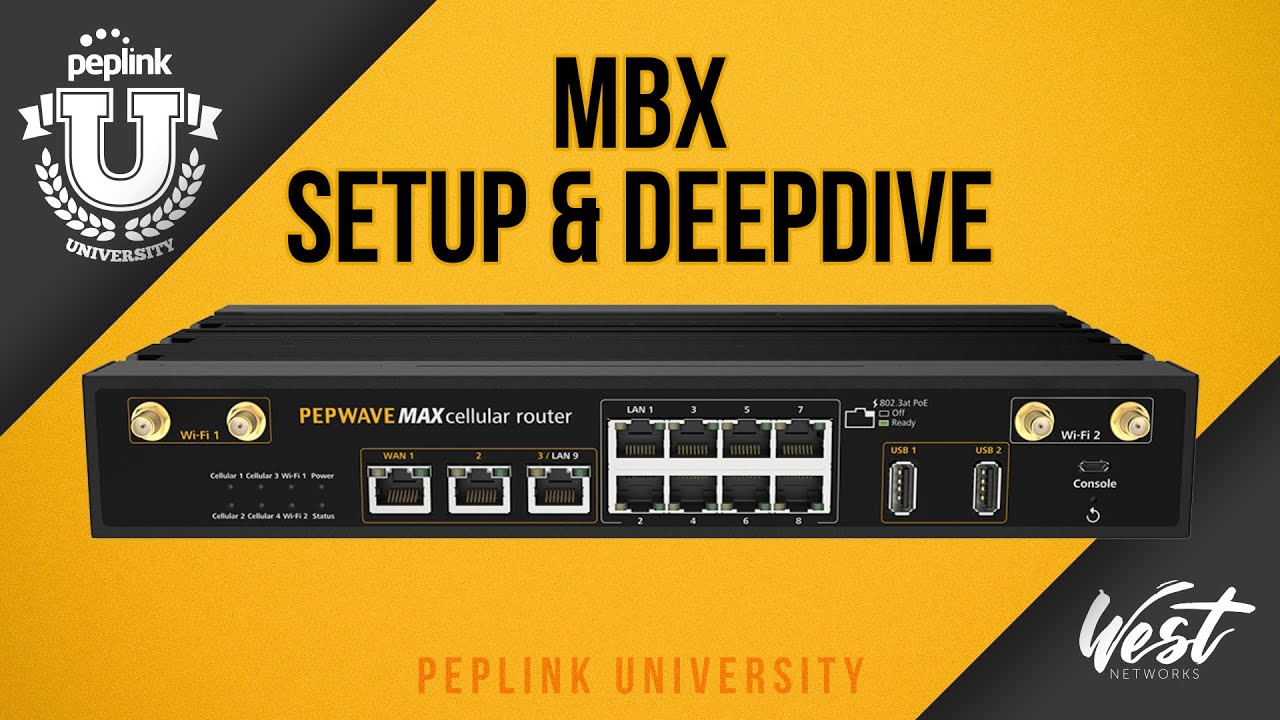
    A bonded site kit — say a Peplink HD4 MBX
    with four 5G modems on four different carriers, plus a
    Starlink Enterprise Kit
    doesn’t pick the best path and pray. SpeedFusion splits every stream into packets
    and sprays them across all paths at once, reassembling them in order at the far
    end. Three consequences follow:

    1. Bandwidth adds up. Four 5G uplinks at 30–75 Mbps each plus Starlink’s
      20–40 gives you 120–300+ Mbps of aggregate uplink — several 4K HEVC feeds’
      worth, with headroom for comms and file backhaul.
    2. Failover is invisible. A carrier’s cell site gets congested, a rain cell
      parks over the dish — packets simply stop being sent down that path. No
      session drop, no re-buffer. Hot failover in milliseconds, not “reconnecting…”
    3. Jitter disappears. WAN smoothing duplicates critical packets across two or
      more paths and uses whichever copy arrives first. For an SRT contribution
      feed, that’s the difference between broadcast-clean and watchable-but-embarrassing.

    What a REMO site kit looks like

    For most productions the venue side is one flight case and one antenna run:
    HD4 MBX, Starlink terminal, pre-activated SIMs on four carriers, and SpeedFusion
    profiles pre-built so the program stream gets the smoothed, duplicated paths
    while crew internet rides what’s left. Setup is 8–15 minutes with one person. If
    the venue offers a house circuit, plug it in — it becomes one more bonded path
    instead of the thing you depend on.

    For flagship sites, step up to a Balance 580X
    core: up to eight 5G modems plus Starlink plus wired WAN, feeding the whole
    compound.

    The budget line that changes

    Run the numbers on a typical streamed college basketball production: the old way
    flies eight people and rents a $9,000 venue circuit; the REMO way sends two, ships
    one case, and spends about $200 in data. Production quality is identical —
    arguably better, because your A-team can cut three games in one day from home.

    The uplink stopped being the risk. It’s now the reason the workflow works.

    Ready to spec your REMO kit? Talk to West Networks
    or shop the solution.

    (~760 words)


  • The $6,500 Question: Do You Still Need an SNG Truck in 2026?

    Every director of engineering knows the number, even if it never appears on one
    line of the budget: a six-hour satellite remote costs somewhere between $6,000 and
    $9,500 once you add up the truck day, the operator, fuel, parking, and $300–$600
    an hour of Ku-band space segment. Multiply by forty remotes a year and you’re
    spending a quarter of a million dollars annually to do something a flight case can
    now do better.

    That’s not a rhetorical flourish. Let’s do the math like engineers.

    What the truck actually buys you

    Strip away the nostalgia and an SNG truck buys exactly one thing: a guaranteed
    uplink from a place with no infrastructure. It buys it expensively — a new HD SNG
    build runs $450,000 to $750,000, amortized over 10–15 years during which the
    technology inside becomes a museum piece — and it buys it slowly. Truck
    positioning, dish acquisition, and line-up typically eat 60 to 120 minutes before
    you’re on the bird.

    For decades that trade was worth it, because the alternative was nothing.

    What changed

    Three things, all in the last few years.

    First, 5G got real. A single modern carrier connection routinely delivers 30–75
    Mbps of uplink. An HEVC 1080p contribution feed needs 8–12. Even 4K needs only
    25–35.

    Second, Starlink arrived. A flat high-performance Enterprise terminal delivers
    150–250 Mbps down and 20–40 up from any parking lot in the country, and — this is
    the part broadcasters care about — it does not care how many phones are in the
    stadium.

    Third, and most important: bonding matured. The reason “cellular” earned its bad
    reputation in broadcast is that a single carrier is a single point of failure, and
    single points of failure produce dead air. Peplink SpeedFusion changes the
    architecture. A quad-modem unit like the HD4 MBX
    puts your stream on four carriers simultaneously, plus Starlink, plus the venue
    circuit if one exists. Hot failover happens at the packet level: when a path
    degrades, traffic is already flowing on the others, so nothing reconnects and
    nothing freezes. WAN smoothing duplicates critical packets across paths to erase
    jitter. The stream doesn’t know a carrier died. Neither does your audience.

    The math, side by side

    Take our regional broadcaster with 40 remotes a year:

    • Old way: 40 × $6,500 = $260,000/year, plus $45k–$75k/year of truck
      amortization.
    • New way: an HD4 MBX at ~$15,000 one-time, a Starlink Enterprise Kit at
      ~$3,000 plus service, SpeedFusion Connect at ~$1,500/year, and data at roughly
      $250 per remote (an 18 GB shoot on pooled enterprise SIMs). Year one: about
      $34,000. Every year after: under $18,000.

    Payback arrives in three to four truck days. Not months. Days.

    The 5% where the truck still wins

    Honesty matters more than a clean pitch. Keep a truck (or book one) when you’re
    genuinely beyond all coverage and can’t see the sky — deep parking structures,
    some canyon terrain — or when a rights-holder contractually mandates satellite
    backhaul. That’s a small and shrinking list. Everything else — pressers, high
    school and college sports, election nights, weather remotes, festivals — is a
    bonded-kit job now.

    What to do next

    Count your remotes. Multiply by your real all-in truck cost. If the number makes
    you wince, talk to West Networks
    and we’ll design your kit with the same math laid bare — or go straight to the
    hardware and shop the HD4 MBX.

    (~800 words)